The Buddhist Vegetarian Tradition
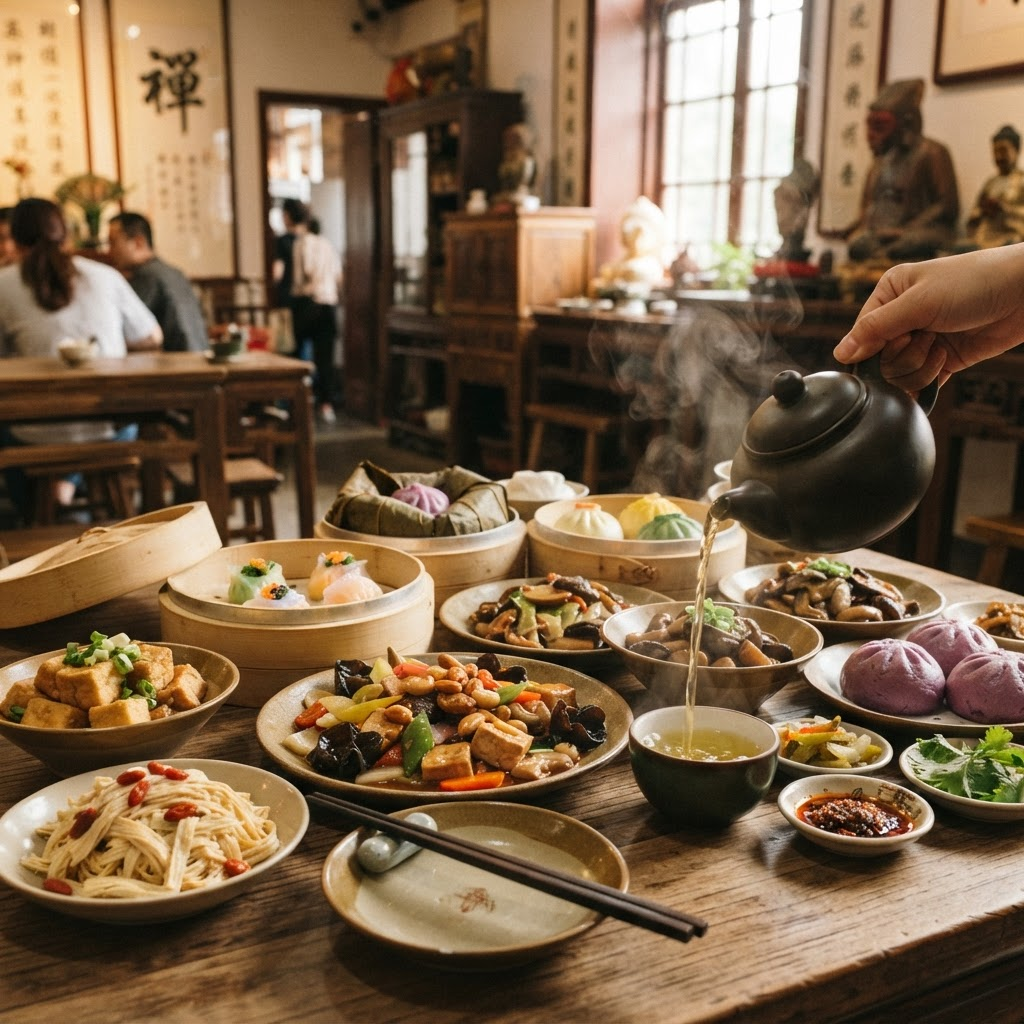
Vegetarian cooking in China is not a modern lifestyle trend — it is a culinary tradition more than a thousand years old. Buddhist monastic kitchens developed elaborate plant-based cuisine out of the principle of not taking life, and that tradition spread from temples to the wider culture.
The result is a vast repertoire of techniques: wheat gluten transformed into chewy textures, tofu pressed, fried, and fermented into countless forms, mushrooms and seaweed adding depth, and sauces built entirely from plants. What Western plant-based cooking often tries to recreate with processed substitutes, Chinese cooks have been doing for centuries with simple ingredients.
The Building Blocks You’ll Meet
A few ingredients appear again and again in vegetarian Chinese cooking, and knowing them makes every menu more readable:
- Tofu (豆腐) — silken, firm, pressed, fried, or fermented; the chameleon of the cuisine
- Yuba / tofu skin (腐竹) — delicate sheets and rolls with a remarkable texture
- Wheat gluten (面筋, 考胂) — the base of most “mock meat” dishes
- Mushrooms (菇菇) — shiitake, enoki, wood ear, and in Yunnan, extraordinary wild varieties
- Bean sprouts, leafy greens, and seasonal vegetables — always cooked with skill
Regional Styles Worth Traveling For
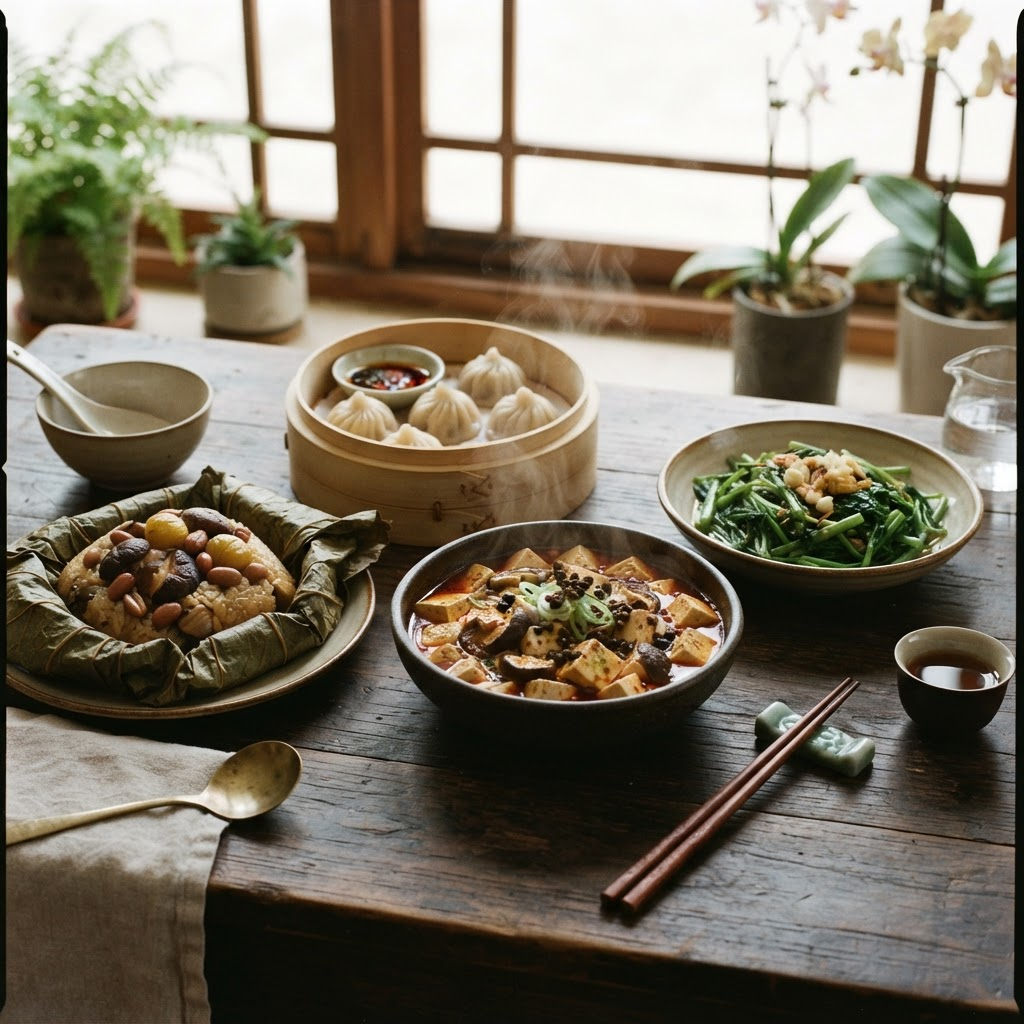
Each region brings its own genius to plant-based food. Sichuan proves that vegan food can be thrillingly spicy — mapo tofu without the meat is still a dish of legend, and the region’s vegetable stir-fries are electric. Cantonese cooking offers refined dim sum and vegetable dishes that respect the ingredient’s own character; ask for vegetarian dumplings and you will rarely be disappointed.
In Jiangnan (the Yangtze delta), the tradition of elegant mock meat reaches its highest art, especially in temple restaurants around Hangzhou and Suzhou. And Yunnan, with its wild mushrooms and fresh mountain produce, is arguably the most exciting province in China for plant-based eaters.
Ordering With Confidence
The single most useful word is “quán sù” (全素) — fully vegetarian. In a dedicated vegetarian restaurant, order freely and explore. In an ordinary restaurant, be specific: no chicken powder, no oyster sauce, no meat stock. Many menus mark vegetarian dishes, and staff are used to dietary questions from locals too.
When in doubt, follow the monks: temple restaurants and Buddhist vegetarian chains are the safest and often the most delicious options in any city. Lunchtime at a temple dining hall is one of China’s great hidden food experiences.
A Note on Strictness
How strictly you eat will shape your choices. Traditional Buddhist vegetarian cooking avoids the five pungent roots — onion, garlic, and their relatives — while most Western vegans enjoy them. Some dishes described as vegetarian may use dairy or eggs, especially desserts and pastries, so it is worth specifying “no egg, no dairy” when it matters to you.
The beauty of eating plant-based in China is that the tradition is on your side. You are not asking restaurants to accommodate an unusual request — you are connecting with one of the oldest and most refined vegetarian cuisines on earth.